

Aug
Peyton Watson Trade: What the Cavaliers Move Means for Cleveland and Denver
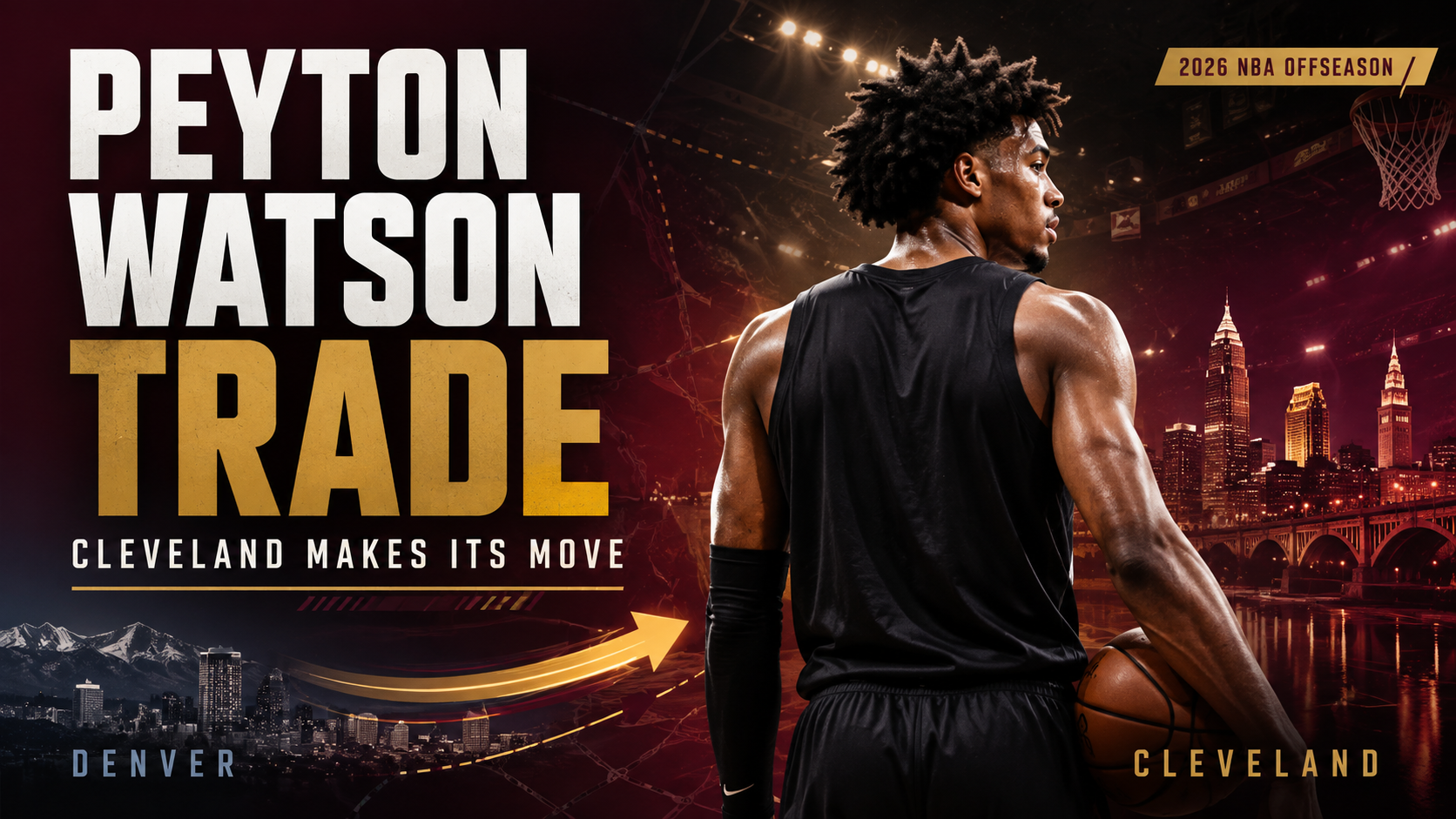
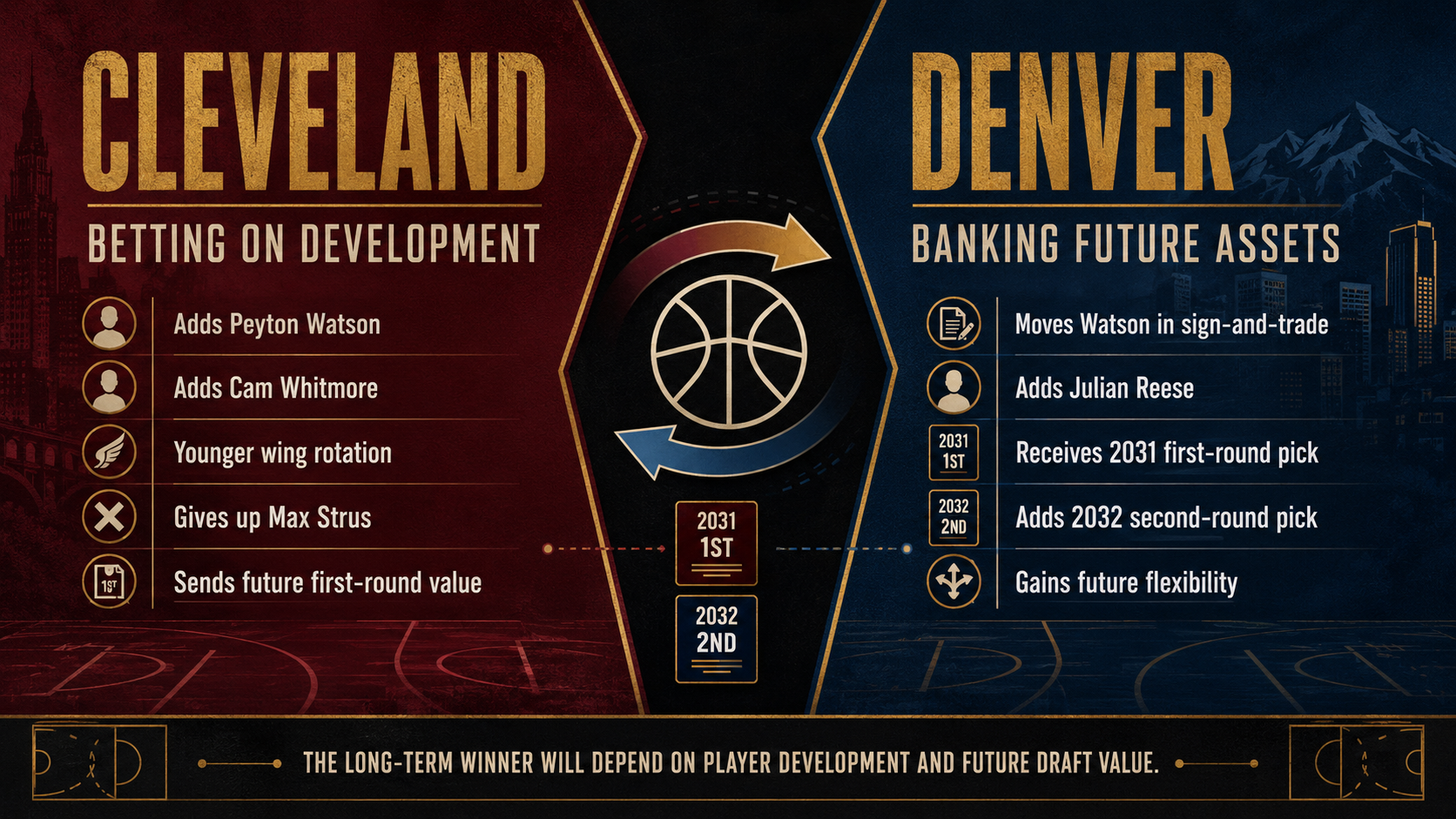
The Peyton Watson Cavaliers trade gives Cleveland one of the NBA offseason’s more intriguing young-wing additions. The Cavaliers acquired Watson from the Denver Nuggets in a five-team sign-and-trade, while Cleveland also landed Cam Whitmore and moved Max Strus to the LA Clippers.
For Cleveland, the deal is a bet that Watson’s breakout 2025-26 season is the beginning of a larger step forward. For Denver, it turns a restricted free-agent situation into future draft capital.
The final transaction is also more complicated than some early headlines suggest. Initial reporting described a three-team framework before the deal expanded to five teams.
Peyton Watson Cavaliers Trade: What Happened?
NBA.com reported the completed transaction as a five-team sign-and-trade involving Cleveland, Denver, the LA Clippers, Charlotte Hornets and Washington Wizards. The Cavaliers officially announced their acquisition of Watson on August 21.
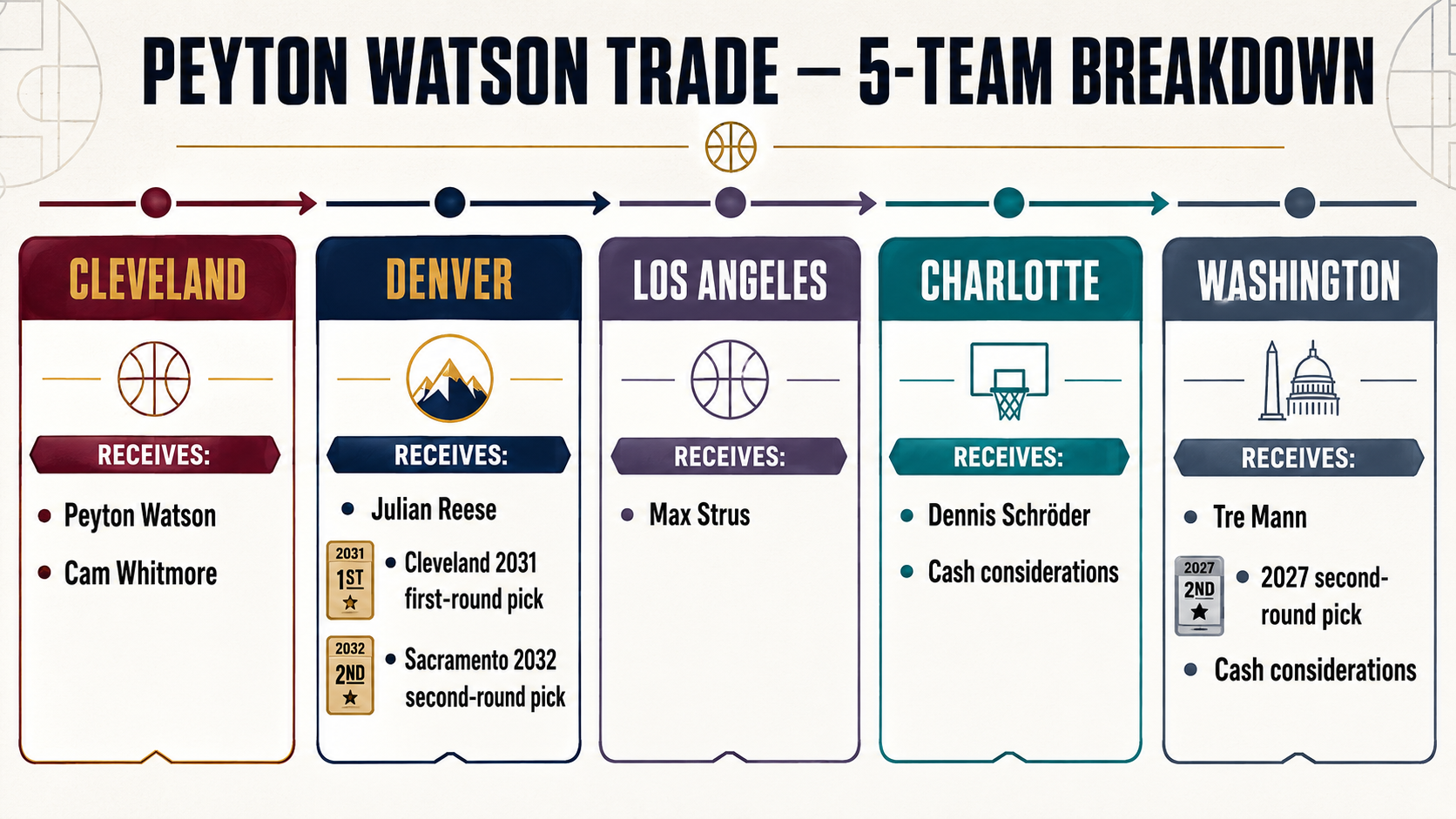
The final structure includes:
| Team | Key Return |
|---|---|
| Cleveland Cavaliers | Peyton Watson, Cam Whitmore |
| Denver Nuggets | Julian Reese, Cleveland 2031 first-round pick, Sacramento 2032 second-round pick |
| LA Clippers | Max Strus |
| Charlotte Hornets | Dennis Schröder, cash considerations |
| Washington Wizards | Tre Mann, 2027 second-round pick, cash considerations |
Reuters reported that Cleveland’s 2031 first-round pick going to Denver is unprotected, making it a meaningful long-term asset even though its eventual value will not be known for years.
That future pick is an important part of the trade evaluation. Cleveland is not simply exchanging current players; it is giving Denver an asset whose value will depend on where the Cavaliers stand five years from now.
Why Peyton Watson Matters for Cleveland
Watson arrives after the best regular season of his NBA career.
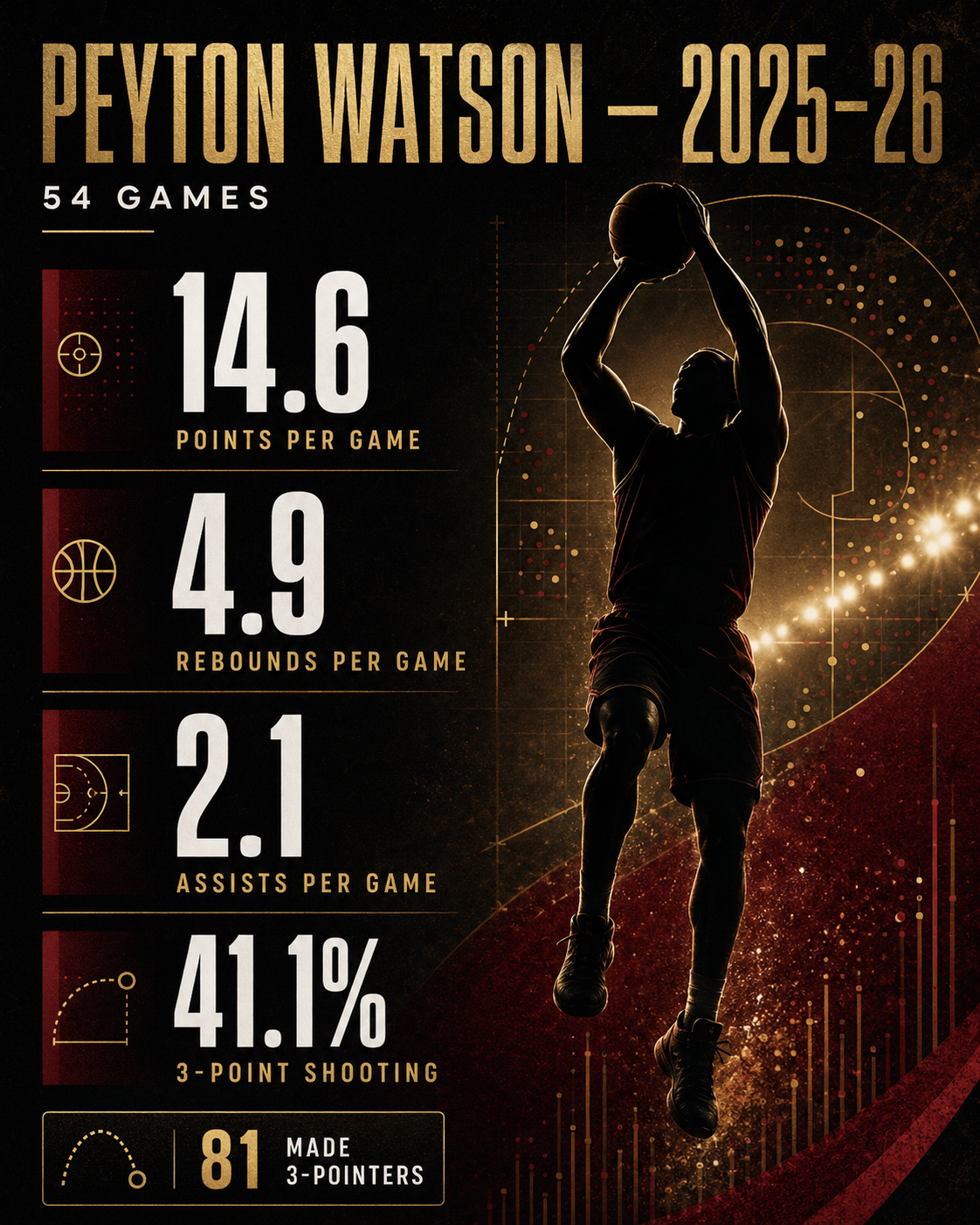
In 54 games during 2025-26, the 6-foot-8, 23-year-old averaged 14.6 points, 4.9 rebounds and 2.1 assists per game. NBA statistics also list him at 41.1% from 3-point range on 3.6 attempts per game.
Reuters reported that Watson started 40 games and increased his total made 3-pointers from 48 the previous season to 81 in 2025-26.
Those numbers do not guarantee that his improvement will continue at the same rate, but they explain why Cleveland would see him as more than a developmental project.
Cleveland Is Buying Into Watson’s Upward Trend
The central question is not whether Watson improved in Denver. The statistics show that he did.
The more important question is how much further that improvement can go.
Cleveland won 52 games during the 2025-26 regular season and entered the playoffs as the No. 4 seed in the Eastern Conference. The Cavaliers eventually reached the Eastern Conference Finals, where the New York Knicks swept them in four games.
That postseason run gives the Watson move additional context.
Cleveland is not rebuilding. It is changing a roster that was already good enough to reach the conference finals.
Watson gives the Cavaliers another long, athletic perimeter option whose recent offensive growth could make him useful on both ends of the floor. The trade therefore looks less like a short-term patch and more like a bet on a player entering his prime-development years.
Cam Whitmore Changes How the Deal Should Be Judged
Watson may attract most of the attention, but Cleveland also received Cam Whitmore as part of the expanded transaction.
That matters when assigning a future “winner” or “loser” to the deal.
If Watson becomes a major rotation piece while Whitmore also develops into a contributor, Cleveland’s return will look very different than if only one player becomes dependable.
The Cavaliers’ side of the transaction should therefore be evaluated as a package rather than as a simple Watson-for-Strus swap.
What Cleveland Gave Up
The most recognizable outgoing player is Max Strus, who goes to the Clippers.
Strus spent three seasons with Cleveland but appeared in only 12 games during 2025-26 after dealing with a left foot Jones fracture. He averaged 11.2 points in those games.
The potentially larger long-term cost is Cleveland’s unprotected 2031 first-round pick.
Future first-round picks are inherently difficult to value because the roster, coaching staff and competitive position of a franchise can change dramatically over several seasons.
For Cleveland, the calculation is straightforward in principle: the Cavaliers believe Watson’s age, recent production and development potential are worth giving up some future flexibility.
Whether that proves correct will take years to determine.
What the Peyton Watson Trade Means for Denver
Denver approached the situation from a different position.
Watson had completed his rookie contract and entered the offseason as a restricted free agent. Instead of matching or reaching a new agreement that kept him in Denver, the Nuggets moved him through the sign-and-trade structure.
In exchange, Denver receives Julian Reese, Cleveland’s 2031 first-round pick and Sacramento’s 2032 second-round pick.
The Nuggets finished the 2025-26 regular season 54-28, securing the No. 3 seed in the Western Conference. They then lost to Minnesota in six games in the first round.
Denver is therefore also making this move from a competitive position rather than beginning a conventional rebuild.
Denver Converts a Contract Decision Into Draft Capital
From an asset-management perspective, the Nuggets have converted Watson’s free-agent situation into future draft compensation.
The 2031 pick is especially interesting because it is so far in the future.
Denver could eventually use it to draft a player, or the pick could become part of another trade. Anything more specific would be speculation at this stage.
That is why it is too early to judge Denver’s return solely by the players immediately involved.
If Watson develops significantly in Cleveland, Denver may face questions about letting him go. If the 2031 first becomes a high-value selection or helps the Nuggets complete another important transaction, the calculation could look very different.
Why Some Reports Say It Was a Three-Team Trade
There is a legitimate reason readers may see different descriptions of the deal.
Reuters reported the initial framework as a three-team transaction involving Cleveland, Denver and the Clippers. Watson was headed to Cleveland, Strus to Los Angeles and draft compensation to Denver.
The transaction was later expanded to incorporate moves involving Charlotte and Washington.
NBA.com’s updated report identifies the completed structure as a five-team sign-and-trade.
For current coverage, five-team trade is therefore the more accurate description of the finalized transaction.
This is also an example of why breaking NBA trade details can change between the first report and the final transaction structure.
Peyton Watson’s Reported Cavaliers Contract
Reuters reported that Watson will sign a four-year, $88 million contract as part of the sign-and-trade and that the agreement includes a player option and trade kicker. The outlet reported those contract details based on information from Watson’s agent.
Because those details originated in reporting rather than the trade asset list itself, the most accurate wording is “reported four-year, $88 million contract.”
That distinction matters in news coverage.
The trade itself has been announced, while individual contract clauses should continue to be attributed to the reporting that disclosed them.
One Important Question: Watson’s Health
Watson missed Denver’s 2026 playoff run because of a hamstring injury that was originally sustained in February and aggravated again in April, according to NBA.com.
That does not justify predicting future injury problems, but it is relevant context when evaluating what happens next.
For Cleveland, one early storyline will be Watson’s availability and how quickly he can establish a role in a new rotation.
His long-term value to the Cavaliers will ultimately depend more on what he does on the court than on the initial excitement surrounding the transaction.
What Happens Next for Cleveland?
Cleveland now has to determine how Watson and Whitmore fit into a roster that already reached the conference finals.
The most important questions are practical:
- How large will Watson’s role be?
- Can his 3-point improvement carry into another season?
- How will Cleveland use his size and defensive versatility?
- How will the Cavaliers distribute wing minutes after adding two young players?
Those are questions that training camp, preseason and regular-season games will begin to answer.
The trade itself tells us what Cleveland paid. The next stage will determine whether the Cavaliers correctly identified a player capable of outperforming that price.
What Happens Next for Denver?
For Denver, the focus shifts from Watson to what the Nuggets do with the flexibility and assets created by the deal.
The 2031 first-round selection does not have to remain on Denver’s books until draft night. Future picks can become trade tools, particularly for teams attempting to keep a championship-caliber roster competitive.
However, there is no verified indication yet that Denver plans to move the pick again.
Until another transaction occurs, the most accurate interpretation is simply that the Nuggets chose future draft value over retaining Watson on Cleveland’s reported new contract.
FAQ About the Peyton Watson Cavaliers Trade
Is Peyton Watson officially going to the Cleveland Cavaliers?
Yes. Cleveland announced the acquisition, and NBA.com reported Watson as part of the finalized five-team sign-and-trade.
What did Cleveland receive?
The Cavaliers received Peyton Watson from Denver and Cam Whitmore from Washington as part of the completed five-team transaction.
What did Denver receive?
The Nuggets received Julian Reese, Cleveland’s 2031 first-round pick and Sacramento’s 2032 second-round pick. Reuters reported that the Cleveland first-rounder is unprotected.
How much is Peyton Watson’s Cleveland contract?
Reuters reported a four-year, $88 million agreement with a player option and trade kicker. Because these are reported terms, they should continue to be described as such unless additional official contract documentation provides the same details.
Why was the deal initially called a three-team trade?
The original reported framework involved Cleveland, Denver and the Clippers. It was later expanded to incorporate Charlotte and Washington, resulting in the finalized five-team structure.
Conclusion
The Peyton Watson Cavaliers trade is a calculated bet by Cleveland on a young player whose offensive production increased sharply in 2025-26.
The Cavaliers add Watson and Whitmore after reaching the Eastern Conference Finals, but they also give up Max Strus and a potentially valuable unprotected future first-round pick.
Denver, meanwhile, turns Watson’s restricted free-agent situation into long-term draft capital.
There is not enough evidence yet to declare a winner. Watson’s development, Cleveland’s results and the eventual use or value of the 2031 pick will decide that over time.
What is confirmed now is that Watson is headed to Cleveland as part of a finalized five-team sign-and-trade — a move with meaningful implications for both the Cavaliers and Nuggets.
